
A new study by MIT and Boston University found that the brain region responsible for language remains active and similar in older adults compared to younger adults. However, the brain system for decision-making, known as the 'multiple demand network', shows significant differences with age. This suggests that specialised brain functions like language processing may be more resilient to ageing than general-purpose cognitive functions.

'It seems unlikely that organisations will be a bunch of individuals who work on their own and there are no teams anymore, because that is not sustainable.'

Air Marshal (retd) Jeetendra Mishra has been appointed as the first Chief Executive Officer (CEO) of the Shri Ram Janmbhoomi Teerth Kshetra Trust. His selection follows a rigorous process and comes amidst a recent controversy regarding alleged embezzlement of temple donations.

The Federation of Indian Pilots (FIP) on Thursday renewed its demand for a judicial probe into the AI-171 crash and urged authorities not to release any interim investigation report, saying it would create further confusion and speculation.

Prime Minister Narendra Modi, addressing the BRICS summit, called for a fundamental shift in global governance, advocating for the replacement of the current 'pyramid of privilege' with a 'platform of partnership' where the Global South becomes a 'rule shaper' rather than a 'rule follower'.

India's newly formed Artificial Intelligence Governance and Economic Group (AIGEG) is set to advocate for a unified legal framework for AI companies, including developers of large language models and chatbot systems, alongside broader operational rules.

A new book, "The River That Remembers: Microbial Intelligence of Nature" by Padma Shri awardee Ajai Kumar Sonkar, claims that the Triveni Sangam at Prayagraj is a unique viral-bacterial laboratory. It suggests that the sacred dips taken by devotees lead to an intense microbial exchange, accelerating phage evolution, especially during events like Kumbh Mela, as diverse human microbiota interact with the river's existing microbiome.
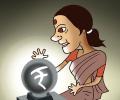
India's UPI system continues its rapid growth, dominating retail payments. Recent amendments to the Payment and Settlement Systems Act allow for targeted Merchant Discount Rates (MDR) on high-value merchant transactions, aiming to create a self-sustaining revenue model for the ecosystem while keeping P2P and low-value payments free. This move could generate significant revenue and encourage ecosystem participation.

The Department of Personnel and Training (DoPT) in India is actively integrating artificial intelligence (AI) into government processes to enhance efficiency, transparency, and accuracy. Initiatives include AI-enabled solutions for salary processing, grievance handling, and training content development, with a focus on data security and ethical use.

'Think of the brain like a machine, and Alzheimer's is like rust.'
'Like a rusty machine breaks down, a rusty brain also breaks down. And when it breaks down, you have memory loss, cognitive issues and so on.'

The White House has launched a major crackdown on the 'Great Transhipment Scam', accusing India and over 40 other nations of helping Chinese exporters bypass US tariffs by misrepresenting the origin of goods. The US plans to use AI-driven monitoring and anti-transhipment clauses in future trade agreements to strengthen enforcement.
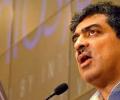
Infosys co-founder Nandan Nilekani predicts that large corporations in India will lose jobs due to automation and AI, while millions of small businesses will drive future employment growth. He advocates for deregulation, simplified business interfaces, and digital platforms to support small entrepreneurs and a gig economy workforce.

Union Health Secretary Punya Salila Srivastava highlighted the strong health cooperation within BRICS, emphasising the critical role of digital health and artificial intelligence in ensuring continuity of care. Speaking at the 16th BRICS Health Ministers' meeting, she noted shared challenges among member nations and showcased India's advancements in digital health infrastructure and AI strategy.

A joint study by IBM and IndiaAI, a MeiTY initiative, indicates that Artificial Intelligence (AI) has the potential to contribute over USD 500 billion to India's economy by 2030. The report highlights the need for improved AI literacy, infrastructure, and data quality to fully realise this potential.
A recent study published in npj Aging reveals that epigenetic clocks, which estimate biological age by measuring DNA methylation, capture various aspects of aging biology, including immune system changes, metabolism, and cell communication. Researchers also developed new gene-expression-based clocks that show stronger predictive power for age-related diseases and mortality.

An analysis reveals that content from state-controlled media can significantly influence the information environments that AI chatbots learn from, shaping their responses to user requests.

Vinesh Phogat has vowed to return stronger after losing in the Asian Games selection trials to Meenakshi Goyat. Phogat expressed her frustration with the Wrestling Federation of India (WFI) and alleged unfair treatment during the trials, despite being allowed to compete following court intervention.

Unified Payments Interface (UPI) transactions in India reached Rs 29.8 lakh crore in August, approaching record levels. Volume also hit a new high of 24.51 billion transactions, driven by festive activities like Raksha Bandhan. The digital payment system continues its rapid growth, expanding its global presence to 11 countries, with further growth anticipated during the upcoming festive season and new use cases like credit on UPI.

Air India Group has accumulated losses of about Rs 47,821 crore since its takeover, leaving its prolonged transformation among the biggest unfinished projects of N Chandrasekaran's tenure.

The All India Tennis Association (AITA) leadership, led by President Chintan Parikh and Secretary General Sunder Iyer, has pledged to prioritise player welfare, transparent governance, and athlete representation if given a full term. They aim to transform Indian tennis by addressing past administrative issues and fostering a player-centric environment.
The Education Ministry will focus on training teachers in the use of Artificial Intelligence tools over the next three to four months to support classroom teaching, lesson planning and student assessment, a senior official said.

Conman Sukesh Chandrasekhar has been sentenced to eight years of rigorous imprisonment by a Delhi court for impersonating a Supreme Court judge and attempting to influence a bail proceeding. The court emphasised the need for a deterrent message against manipulating the justice system, especially given the rise of sophisticated impersonation techniques.
India has been drawn into Group E of the AFC U-17 Men's Asian Cup Qualifiers, alongside hosts Malaysia, Palestine, Singapore, and Guam. The qualifiers will take place in Malaysia from November 11 to 20, with India aiming for their 11th appearance in the main tournament, scheduled for Uzbekistan in 2027.
Vice President C P Radhakrishnan has championed the use of artificial intelligence for good governance, highlighting its potential to improve government services and build an inclusive and efficient India.
India's Unified Payments Interface (UPI) recorded an unprecedented 24.51 billion transactions valued at Rs 29.8 lakh crore in August, largely propelled by the Raksha Bandhan festival. This surge marks a 22% annual increase in volume and 20% in value, highlighting the expanding reach and depth of the UPI ecosystem. Experts anticipate further growth during the upcoming festive season, while UPI's international acceptance now spans 11 countries.

Indian Grandmaster Nihal Sarin discusses fellow world champion D Gukesh's recent performance slump, attributing it to a lack of confidence rather than a decline in skill. Sarin expresses hope that the upcoming Chess Olympiad will help Gukesh regain his form. He also shares his views on the increasing role of AI in chess, the evolution towards faster formats, and potential improvements in the chess ecosystem.

Indian IT companies have significantly reduced their fresh H-1B visa applications for US FY27, a direct consequence of soaring fees imposed by the Trump administration and new lottery system changes that prioritise higher-salaried employees, leading to a seven-year low in registrations.

The Rajasthan high court, Jodhpur, has taken suo motu cognisance of issues concerning Gen Z, Gen Alpha and Gen Beta, expressing concern over junk food, excessive screen time, paper leaks, inadequate infrastructure in rural schools and the possible erosion of basic learning skills in the age of artificial intelligence.

Former Pakistan hockey players have expressed deep concern over the national team's poor performance at the World Cup, advocating for an immediate injection of fresh talent and a focus on the upcoming Asian Games. They attribute the sport's decline to cricket's dominance and a failure to adapt to modern hockey, urging the federation to prioritise competitive success to regain public interest.

Researchers at IIT Madras have discovered that rare 'specialist' marine microorganisms play a crucial and previously underestimated role in maintaining the stability of ocean ecosystems. Their global analysis of bacterial communities, published in 'mSystems', reveals these microbes act as vital connectors within microbial networks, significantly impacting ecosystem resilience and informing conservation efforts.

India's IT Secretary S Krishnan announced an upcoming meeting with Meta's global team to address critical issues including lapses in tackling Child Sexual Abuse Material (CSAM), the temporary restriction of PM Modi's Facebook post, and concerns over synthetically generated information. The government expects Meta, as a leading tech company, to have robust systems to manage these challenges effectively.

India has become a significant supplier of gasoline to Russia, with Indian refiners providing 1 million barrels in the last two months, as Ukrainian drone attacks severely disrupt Russia's domestic fuel production.
Researchers at BRIC-RGCB in Thiruvananthapuram have developed a novel nanopore-based sensing technology. This innovation allows for the early and highly sensitive detection of biomarkers associated with neurodegenerative diseases like Parkinson's and ALS, addressing a critical challenge in current diagnostic methods. The technology, published in Nature Nanotechnology, uses self-assembling dual-diameter nanopore sensors to identify disease-specific biomarkers even at low concentrations.
Researchers have developed a lightweight, wearable polygraph system that adheres to the chest and measures heart activity, breathing patterns, sweat response, blood flow, and temperature to provide a real-time, whole-body view of stress.

Anthropic CEO Dario Amodei emphasized India's crucial role in addressing the challenges posed by AI, including autonomous behavior, misuse potential, and economic displacement, during his address at the India AI Impact Summit 2026.

A think tank, GTRI, has urged India to resist US pressure regarding its UPI policies, advocating for competition, policy autonomy, and a sustainable payments ecosystem. This comes as the Lok Sabha passed a bill allowing charges on UPI, and the US has criticised India's digital payment systems, raising concerns about the future of India's digital payment landscape.
A year after the devastating AI-171 Dreamliner crash near Ahmedabad, forensic scientists recount the immense emotional and scientific challenges faced in identifying the 260 victims. The director of Gujarat Directorate of Forensic Sciences, H P Sanghvi, shared the indelible image of a severed hand, symbolising the terror and the team's dedication.
Haryana is institutionalising drone technology as a key governance tool, deploying AI-powered surveillance and high-resolution geospatial mapping. This initiative aims to detect illegal constructions, monitor mining activities, map civic infrastructure, and track pollution across the state. The Chief Secretary reviewed progress on various projects, including an AI-powered Change Detection Application and digital mapping of municipal assets, highlighting the state's commitment to evidence-based governance and improved public service delivery.
Researchers at IIT (ISM) Dhanbad have developed an ultra-compact wearable antenna, measuring just 5x5x0.75 mm, designed to significantly enhance the performance of future healthcare devices, smart wearables, and wireless body communication systems. This innovation offers high-speed data transmission, wider wireless coverage, and a low Specific Absorption Rate (SAR), making it safe and efficient for prolonged use in Wireless Body Area Networks (WBANs).

IdeaForge Technology Ltd has announced a partnership with Digital Media Professionals Inc. (DMP) to develop next-generation AI drones, aiming to enhance autonomous capabilities and expand into the Japanese market.
